Digimat Tools
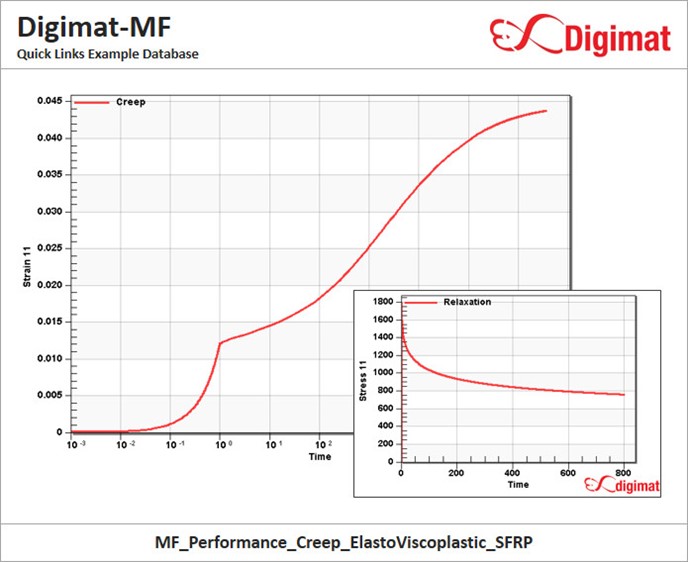
Digimat Mean Field homogenization technology is especially well suited to describe fiber reinforced composites:
• Short fiber reinforced plastics
• Long fiber thermoplastics
• Unidirectional composites
• Woven composites
• Sheet Molding Compound
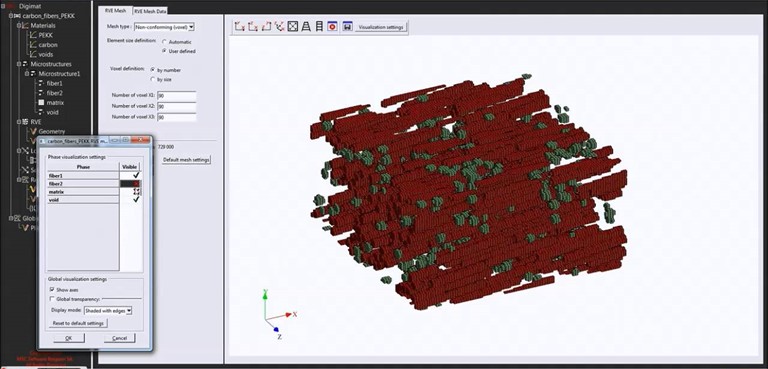
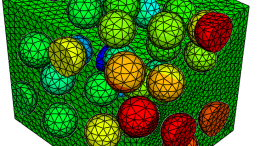
• Digimat-FE produces realistic (stochastic) Representative Volume Elements (RVEs) for a large variety of material microstructures and can as well depend on on external geometric microstructure description such as micro CT-scan or molecular dynamic results.
• Extremely complex material microstructure morphologies can be realized and a broad range of materials can be addressed:
a. Plastics
b. Rubbers
c. Metals
d. Ceramics
e. Nano-filled materials
f. Foams
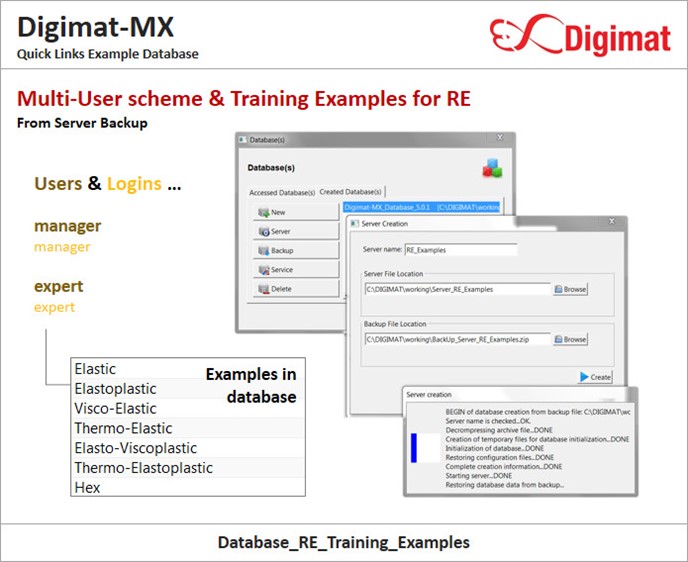
• Public Materials Database:
- Ready-to-run Digimat material models
- Experimental data as a base for building Digimat material models
- Private Materials Database setup & tools
• Flexible user/group scenarios
- Data import & reverse engineering of Digimat material models
- Encryption technology for secured sharing
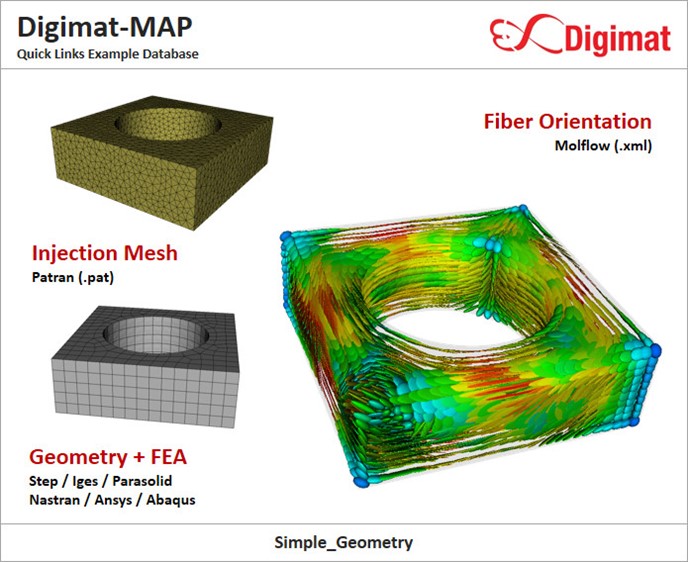
• Capabilities:
- Flexible superposition of meshes and easy transfer of data between the meshes
- Quality assessment by local and global error analysis
- Post-processing of mapping results by microstructure and in-depth investigation of the local material stiffness and response
• Interfaces are supported in Digimat-CAE :
- To FEA software
- To Injection Molding software
- To Draping Simulation software
- To Fatigue software (performing lifetime prediction simulation)
- To Computer Tomography software